
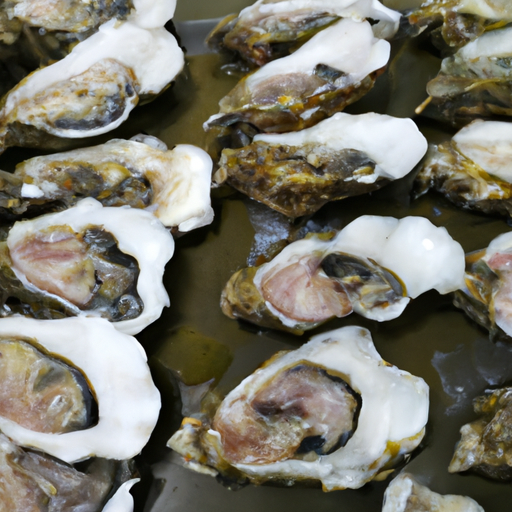
Oysters are a type of bivalve mollusk often found in coastal waters worldwide. They are valued for the salty and briny taste they provide to seafood lovers, particularly when raw. Oysters feed by filtering water through their gills using a mechanism called the cilia, to extract nutrients from the surrounding water.
So what do oysters eat? The answer is really quite simple: plankton. Plankton comprises microscopic plants (phytoplankton) and small animals (zooplankton), such as larvae and tiny crustaceans like copepods and rotifers. As filter feeders, oysters rely on these tiny organisms as their main source of sustenance.
Phytoplankton consists of microscopic algae that use sunlight to produce energy through photosynthesis, just like plants on land. Zooplanktons include small creatures like krill or baby fish that consume phytoplanktons to power their own growth.
Oyster larvae ingest planktonic food via cilia-covered tissue called labial palps that funnel everything into its mouth cavity where it gets sorted out before being processed further down in the digestive tract. Once an oyster reaches adulthood- usually around 2 years depending on species – it will become highly selective about which types of planktons it consumes.
Adult oysters typically prefer diatoms; unicellular algae encased within transparent shells made up of silica bands arranged in intricate patterns visible under a microscope – this potentially allows adult oysters more control over what they choose to eat by controlling how much light enters their shell so they can differentiate between different species . Diatoms have high nutritional value owing primarily due to its high amonts carbohydrates and proteins
In addition diatomas adult try consuming other kinds of single-celled organisms such as flagellates -which swims via whip-like tails called flagella- though generally at significantly lower numbers than diatoms or zoops,. Ciliates, another type of single-celled organisms with hair-like projections called cilia used for motility. Finally adult oysters may also consume small zooplankton and other marine detritus including bacteria, fungi and other decaying organic matter that are collectively too small to properly identify under a microscope.
It is worth noting that while the common belief is that oysters can filter large amounts of seawater every day to extract their nutritional requirements, they actually require significantly less food than most aquatic animals because they have very slow metabolisms. This means that adult oysters can survive for days comfortably without any significant feeding taking place if nutrient levels in surrounding waters remain stable or relatively high.
Environmental factors such as water temperature, pH levels influence how much oxygen and carbon dioxide as well as what kind of planktonic organism are present which ultimately determine an oyster’s health and growth rate by proxy its filtering capacity . Nutrient-rich areas like estuaries with freshwater run-offs from rivers located closer inland usually support higher populations considering abundance f nutrients available through decaying matter found along riverbanks while more open waters tend to be slightly less rich making it challenging finding enough resources needed during critical times immcluding spawning periods.
In conclusion, Oysters use their unique filtration mechanism primarily for extracting micro-organisms found in passing sea water typically phytoplankton though benthic-dwelling micro-invertebrates such diatoms represent larger portion adult dietary consumption preferences due mainly based on its requirement,followed by flagellates,cilates,zooplakntons,detritus depending largely on the species and environment.It’s vitally important however to ensure a healthy ecosystem around these mollusks given recent changes being observed globally such ocean acidification has profound effect showiing slower growing mollusk leading decreased reproduction probability owing simply nutrient densities seriously impacted thereby threatening this economically important aquaculture industry.
Oysters are a type of bivalve mollusk that is prevalent in coastal waters worldwide. These aquatic creatures are highly valued for their salty and briny taste, which makes them an ideal delicacy for seafood lovers who enjoy eating raw oysters. However, what do oysters eat? The answer to this question is crucial in understanding the ecology and biology of these fascinating marine animals.
As filter feeders, oysters rely on phytoplankton and zooplankton as their primary source of food. Phytoplankton refers to microscopic plants that use sunlight to produce energy through photosynthesis, just like plants on land. Zooplanktons refer to small animals such as larvae and tiny crustaceans like copepods and rotifers that consume phytoplankton for energy in turn.
When oyster larvae hatch from eggs, they quickly start ingesting their planktonic meal via tissue called labial palps covered with cilia that funnel everything into its mouth cavity where it gets sorted out before being processed further down in the digestive tract. Once mature adults at around 2 years depending on species laways become selective about types of planktons they consume.
Adult oysters typically prefer diatoms; unicellular algae encased within transparent shells made up of silica bands arranged in intricate patterns visible under a microscope – this potentially allows adult oysters more control over what they choose to eat by controlling how much light enters their shell so they can differentiate between different species . Diatoms have high nutritional value owing primarily due to its high amonts carbohydrates and proteins
In addition diatomas adult try consuming other kinds of single-celled organisms such as flagellates -which swims via whip-like tails called flagella- though generally at significantly lower numbers than diatoms or zoops,. Ciliates another type swim using hair-like projections called cilia used motility.finally adult Oysters may also intake detritus, small zooplankton and other marine detritus including bacteria, fungi and other decaying organic matter that are collectively too small to properly identify under a microscope.
While the common notion is that oysters filter vast amounts of seawater every day to extract their nutritional requirements, they require relatively less food than most aquatic animals because they have very slow metabolism. This means that adult oysters can comfortably survive for days without significant feeding if nutrient levels in surrounding waters remain stable or relatively high.
Water temperature fluctuations , pH levels which influence how much oxygen and carbon dioxide as well as what kind of planktonic organism are present affect an oyster’s health and growth rate by proxy its filtering capacity in general. However nutrient-rich areas such as estuaries tend feature freshwater from inland river upstreams usually support higher populations owing abundance bodies breaking down along these rivers compared with more open waters where parameters like nutrient densities would seriously impacted; therefore posing a potential challenge during critical periods eg spawning seasons
It’s essential to ensure a healthy ecosystem around mollusks considering recent changes being observed globally such ocean acidification has profound effect showing- slower-growing mollusk leading decreased reproduction probability given lower carrying capacity environments resulting from insufficient resources .These impacts could risk abundant species threatened particularly those relying heavily fisheries Aquaculture industry faces now increased economic costs stemming from larvae delay period due primarily low resource availability coupled effects brought about sea level rise.Primary focus should be on ecological supportive initiatives toward preserving healthy environment which will ultimately mitigate or reduce negative impact experienced by life within oceans thereby sustaining economically important aquacultural industry.